

Developing News
Autonomous Vehicles Hit Bumps in the Road
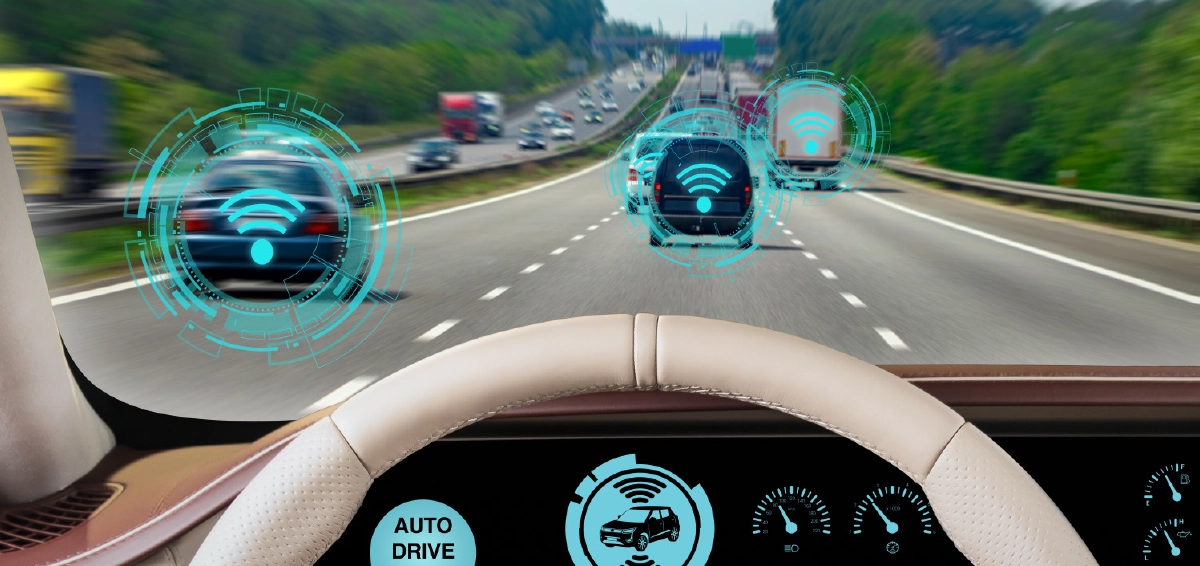
ecent policy and traffic roadblocks have the potential to slow autonomous vehicles’ (AVs) rollout in the U.S. and abroad. Early attempts at driverless vehicles such as Google’s Firefly or General Motors’ Cruise floundered and were discontinued, but these initiatives helped pave the way for today’s commercially viable entities such as Waymo, the Alphabet subsidiary whose robot taxis represent over a quarter of San Francisco’s rideshare market, and Zoox, their upstart competitor backed by Amazon. In China, over half of new vehicles have autonomous driving features similar to Tesla’s assistive AutoPilot and “Full Self-Driving” (FSD) technologies. Lemonade Insurance recently introduced rewards for FSD mileage into its usage-based rating plans due to “far fewer accidents.”
Despite these signs of progress, questions remain over AVs’ readiness for scale. AVs ground San Francisco to a halt in December 2025 when citywide blackouts darkened traffic lights. Waymo’s software was overloaded by novel information, such as more pedestrians crossing and other taxis in close proximity (who were also unsure what to do in the power outage), creating gridlock. Other recent reports of odd behavior include Waymo taxis stopping in front of oncoming trains and swerving into traffic. Because Tesla was an early innovator in FSD, the automaker has become a bellwether in National Highway Traffic Safety Administration (NHTSA) inquiries , specifically with regard to traffic violations and FSD’s ability to safely operate in low-visibility conditions. Waymo recently recalled several vehicles in Austin because they failed to stop for school buses, triggering an NHTSA evaluation. Still other issues of potential concern to regulators include remote backup drivers and deployment of service packs (e.g., software updates, bug fixes, security patches, etc.).
While regulators navigate the complexity, private citizens are taking to the courts. In September 2025 a Florida jury rendered a nine-figure verdict (primarily punitive) against Tesla over its alleged role in a 2019 accident involving Autopilot, where Tesla’s marketing was found to have contributed to the negligent driver’s false sense of security while he was inattentive at the wheel. Waymo must also defend suits related to its vehicles’ behavior; for example, whether the company is responsible for an incident in which two of its taxis impeded a bike lane and caused serious injury.
As injuries and litigation pile up, governments may start to pull back their support of self-driving vehicles. China’s Ministry of Industry and Information Technology significantly scaled down ambitious plans for driverless taxis after a recent fatal accident involving three university students. A draft federal bill in the U.S. aimed to improve competitiveness with China also met apprehension from stakeholders — including the insurance industry — in early 2026. The American Property Casualty Insurance Association and National Association of Mutual Insurance Companies raised concerns about the proposed federal legislation allowing self-driving vehicles to preempt state regulations. There are also concerns about limited access to vehicle data, which is needed to determine the risk profiles of these cars.
What this means for actuaries:
In 2018 the CAS Automated Vehicles Task Force delivered its flagship report. The authors suggested the need to consider potentially massive frequency reductions (e.g., Lemonade pricing premise); shifts from personal auto to product liability and related severity increases (e.g., the Tesla verdict); new or newly important risk factors (e.g., ceasing operations during blackouts or fog); and data sufficiency issues (e.g., whether AVs are on current software). Actuaries grappling with issues from assistive features to robotic fleet coverage would be well served to read (and evolve) the CAS report rather than riding out decades-old approaches on autopilot.
Sources
- https://www.act-news.com/news/waymo-incidents-trigger-nhtsa-review/.
- https://www.bloomberg.com/news/features/2026-01-06/are-autonomous-vehicles-safer-than-human-drivers-we-don-t-know-yet.
- https://www.caranddriver.com/news/a69849571/waymo-robotaxis-roadblocks-san-francisco-blackout/.
- https://www.casact.org/sites/default/files/2021-02/pubs_forum_18spforum_01_avtf_2018_report.pdf.
- https://www.fastcompany.com/90129372/firefly-googles-cute-self-driving-car-is-dead.
- https://www.insurancejournal.com/news/national/2026/01/16/854682.htm.
- https://www.insurancejournal.com/news/national/2026/01/21/855011.htm.
- https://www.latimes.com/business/story/2026-01-16/tesla-is-probing-if-its-self-driving-technology-caused-thousands-of-traffic-violations.
- https://www.local10.com/news/local/2025/08/04/this-is-a-warning-attorneys-say-expect-more-lawsuits-after-240m-tesla-autopilot-verdict/.
- https://www.nytimes.com/2025/11/18/technology/personaltech/zoox-driverless-taxis-san-francisco.html.
- https://people.com/passenger-forced-to-flee-self-driving-vehicle-after-stops-path-of-oncoming-train-11884070.
- https://people.com/waymo-passenger-films-scary-near-miss-in-self-driving-taxi-11870667.
- https://www.reuters.com/business/autos-transportation/us-auto-safety-agency-investigating-two-new-gm-cruise-crash-reports-2023-10-26/.
- https://www.reuters.com/business/retail-consumer/china-bets-europe-self-driving-tech-expansion-2025-10-06/.
- https://www.sfchronicle.com/bayarea/article/s-f-cyclist-sues-waymo-doored-robotaxi-20385289.php.