

On the Shelf
When Human Lives Became an Insurance Claim
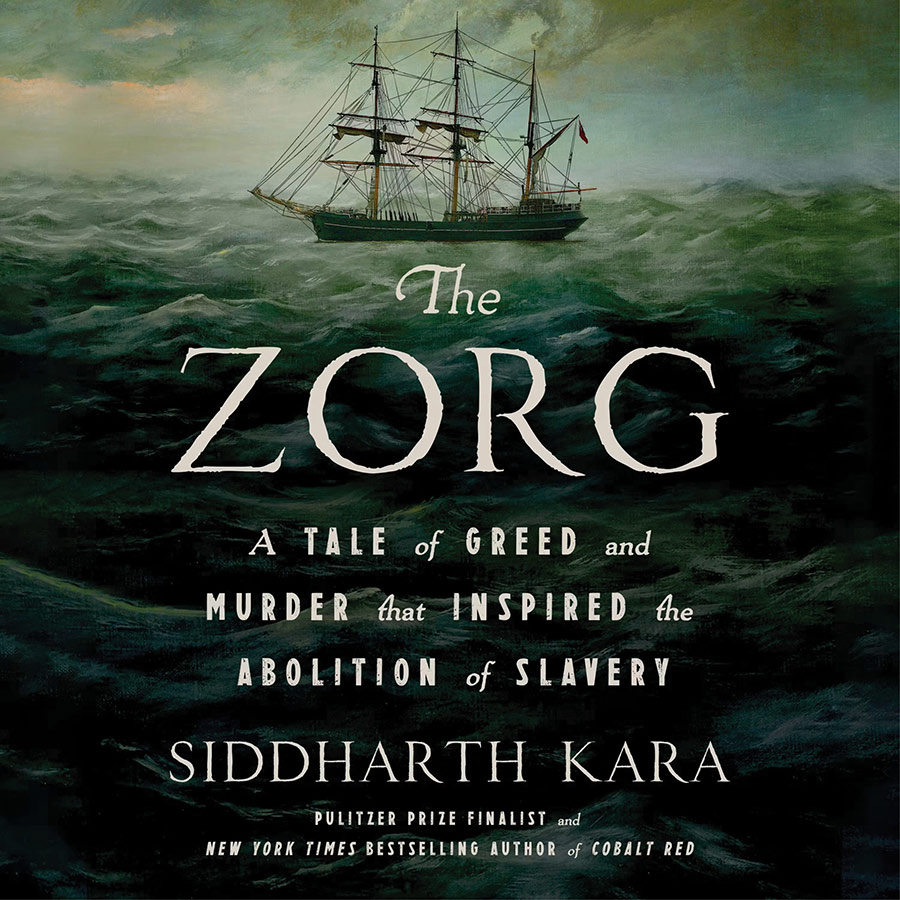
n insurance policy lies at the heart of Siddharth Kara’s “The Zorg,” but it is a small part of the story.
Kara’s book, subtitled “A Tale of Greed and Murder that Inspired the Abolition of Slavery,” describes the doomed journey of a slave ship whose crew threw dozens of captured Africans into the sea. There wasn’t enough fresh water to go around.
The voyage’s sponsor filed a claim for £30 per enslaved person jettisoned. The claim, and the 1783 trials that settled it, brought the horrific event into public awareness. Kara argues, with a bit of success, that the episode was critical to the development of the antislavery movement.
The slave trade was humanity at its ebb. Perhaps the worst fact was that it evolved. Practitioners lacked a moment of compassion for their victims, but they did find ways to improve business practices.
Over time, pillars of the slave trade learned:
- Slave ships needed one-half gallon of water per person per day. The Zorg left the African island of Sao Tome with about 16,150 gallons of water (At 60 imperial tons, water weighed twice as much as its human cargo.)
- Between 1775 and 1800, 13% of captives on British slave ships died, some from disease, some killed during rebellion, some from suicide.
- Captains didn’t necessarily want the Africans to die, but they realized that deaths would occur, and this gave them a cushion as to how much water they needed.
So, the Zorg should have had barely enough water for the 460 people (442 slaves) for the 72 days it was planned to be at sea.
But the ship got lost.
Its captain had been an on-board surgeon who had never before presided over a ship. The first mate fell out of favor. The captain took ill and appointed a ne’er-do-well (who had just abandoned his 12-year-old son alone in Africa) as his replacement.
Through bad weather and, most likely, worse seamanship, the ship found itself well south and east of its goal, Jamaica. A course correction failed, too. Fresh water supplies dwindled.
Women and children went first. They were worth less at auction.
Kara’s descriptions are spare but disturbing:
“The crew members … selected another woman and threw her from the same cabin window. Next was a child. Another woman. Another child …
“… the crew picked fifty-five women and children and threw them ‘alive singly through the cabin windows … into the sea and drowned.’” This included a woman and the infant whom she had just borne at sea.
Then came the men, presumably ordered by their health at the moment. They often went overboard in twos, shackled together. This continued over the next few days until between 123 and 133 slaves drowned.
Two years later the syndicate that had bankrolled the voyage filed its claim.
The marine insurance industry had evolved as efficiently as had the rest of the slave trade. The standard form was revised over the decades; the Zorg claim was filed against the 1779 version.
Slaves who died of natural causes or suicide were excluded. Slaves killed or thrown overboard to quell an insurrection were covered (above a deductible). The enslaver’s claim: the Zorg’s victims fell into another category. Under the law of general averages, jettisoning some preserved the rest and thus the killing was a covered event.
The claim was initially denied. The mortality rate was so high that the insurer concluded it must have been from an excluded peril, like natural death, suicide or crew incompetence.
Two court cases ensued. The insurers lost the first, but they found inconsistencies in testimony. They got a second trial, where they were successful.
In between, the tragedy attracted the attention of Granville Sharp, an early English abolitionist. His fame and the infamy of the case meant the second trial, as Kara puts it, “exposed the ‘vast carnage’ of slavery to the public.”
Insurers here sided with the moral right, but via amoral means. Kara notes that “slave ship insurance underwriters were an integral part” of the cruel system but with the Zorg “their coldly calculated financial interests were aligned with the small number of people in England who sought to abolish slavery.”
Kara must have found the book tough to research. The first trial left no transcript. The captain’s log is lost. The first mate’s diary only remains in fragments that found their way into the court record.
The author wields statistical and legal precision as a steel blade to reveal the deepest of horror. The claimants, he writes, “framed the entire tragedy as one of financial consequence alone.” To the court, the deaths weighed, as one judge put it, “the same as if horses had been thrown overboard.”
Kara shows that the legal and financial machinery that sustained the slave trade ultimately exposed it, turning an insurance dispute into a catalyst for change.