

Exams Reveal Much More than What You Know: Mosely Addresses New CAS Members at CAS Spring Meeting
o the new Associates, let me add my congratulations to many others I know you have already received, and welcome to membership in our great profession. To the new Fellows, congratulations on completing your CAS exam journey. To all those who have supported these new Associates and Fellows, congratulations to you as well.
Today matters. This room represents thousands of hours of focus, sacrifice, resilience, and growth. And I want to be clear at the start: This is not a checkpoint you casually passed. This is a real accomplishment, earned over time, often quietly, and sometimes painfully, especially during those moments when you kept refreshing your browser to make sure you weren’t missing test results that were just posted.
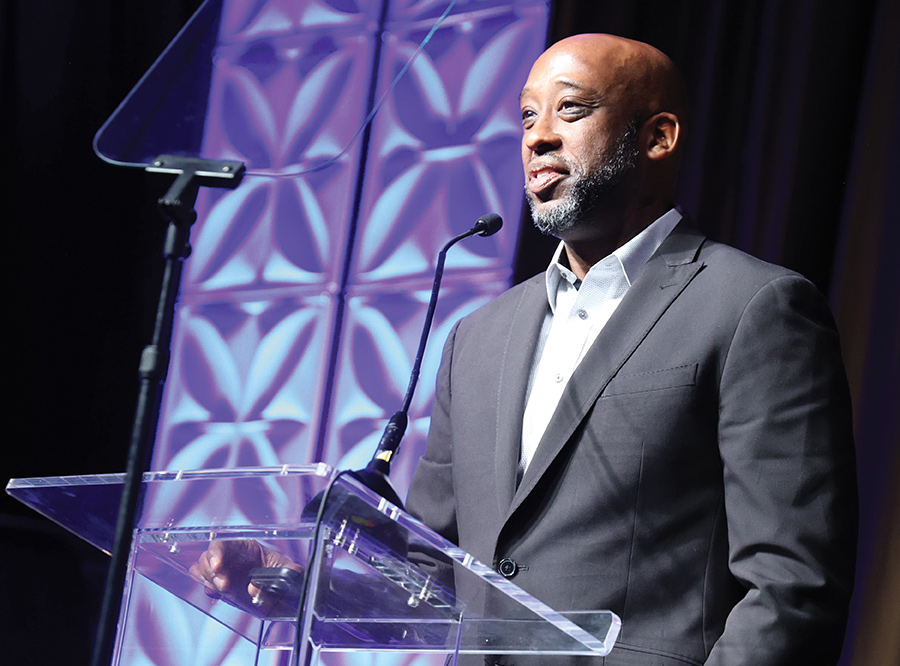
Celebrating the journey
Persistence with judgment
What the exam process teaches — often the hard way — is disciplined persistence.
Most exam journeys aren’t built on heroic, all-night study sessions. They’re built on consistency — showing up regularly, even when life is busy and motivation is low. This required sacrifice — time, sleep, family, and social plans. But you were willing to do it temporarily to achieve a greater goal. That same consistency, sacrifice, and persistence is how trust is built in a career. The people others rely on aren’t necessarily the flashiest. They’re the ones who are prepared, steady, and dependable over time.
I remember points in my own exam journey when pushing harder wasn’t working. More hours didn’t mean better results. What eventually helped was stepping back and changing my approach — what I studied, how I studied, and when I was honest enough to pause. Sometimes, pushing forward for an additional couple of hours was going to be pointless. I had to force myself to stop. Clear my head, refocus, and occasionally remind myself that tired studying mostly just looks like studying. That skill has mattered far more in my career than raw endurance. Because insurance problems don’t reward effort alone; they reward judgment — knowing when to push, when to rethink, when to ask a better question, and, sometimes, when to put it down for a bit.
Two years ago, my oldest daughter convinced me to run a half marathon with her in LA. Running 13.1 miles was definitely an achievement, but the real work involved running hundreds of training miles, starting several months before the marathon. The reason I was able to run the half marathon was because I showed up consistently, even when I didn’t feel like it, and even when life was busy. But I also knew when I needed to modify or adjust the training plan because I just didn’t have it that day. And generally after those times of modification, I was able to show up even stronger. You have demonstrated those same qualities throughout the exam process, and those same qualities will continue to benefit you throughout your career.
Comfort with ambiguity
Over time, I’ve come to think that our work has more in common with a courtroom than with a textbook. In a courtroom, you often don’t get perfect information. You work with incomplete evidence, reasonable interpretations, and real consequences. The goal isn’t a flawless answer— it’s a sound, defensible case. More often than not, we’re operating under a “preponderance of the evidence” standard, not “beyond a reasonable doubt.” (I sat on a federal jury in a criminal trial for two weeks last year. It reminded me how happy I am that I chose to be an actuary rather than a lawyer.)
The exam process trains you for that, sometimes quietly, sometimes loudly. You’re given limited facts. You make assumptions you can justify. You explain your reasoning clearly, knowing that someone intelligent could reasonably disagree. And then you stand behind your work.
What I didn’t fully appreciate at the time was that this wasn’t just about passing exams — it was about learning how to make decisions responsibly when certainty isn’t available.
That skill has surfaced again and again in my career. Whether it’s pricing, reserving, AI, fairness, or advising leadership, the hardest questions are rarely about calculation. They’re about judgment, weighing trade offs, and explaining uncertainty honestly rather than hiding it.
Being comfortable with ambiguity doesn’t mean being unsure. It means being thoughtful. It means knowing what you know, acknowledging what you don’t, and still being willing to act. And that is a skill this profession — and the people you’ll work with — will rely on more than you might realize.
Humility and coachability
I still remember exams I was certain I had mastered — until I didn’t. That experience taught me to value feedback, seek different perspectives, and accept correction without defensiveness. Those habits are what make someone promotable, leadable, and trusted.
Setbacks are not just part of the exam process. They are part of life. But the humility these setbacks have taught us helped us successfully navigate the setbacks in the exam process and will help you successfully navigate any setbacks your career throws at you.
Think of Broadway. The key cast members of any Broadway show always have an understudy. The understudy prepares as if they are going to be the star of the show, even though the majority of the time they will not be the star. But when the moment comes, they’re ready, not because of ego but because of discipline and humility. If you prepare with that combination of discipline and humility, you will go far.
Community and quiet support
That community and support shows up in many ways: collaboration with actuaries you work with, the myriad of ways that CAS members volunteer their time and talents, and the sharing of information and ideas in meetings just like this. There is a place for everyone in this community, and over time, I hope each of you finds the parts of it that feel meaningful to you.
Closing
The qualities that brought you here are not behind you. They’re already part of how you work, think, and lead, and they will continue to be a part of your journey. So, over the next few days, take moments to celebrate the journey, not just the credential. You’ve earned your place in this room, in this profession, and in what comes next. Congratulations and welcome!